Musselburgh, MidlothianSoftware & portals for communication across food supplyMon–Fri 09:00–18:00
FoodLocality

Food-supply communication software · Scotland and the UK

When the order changes at six in the morning, everyone should know by five past.

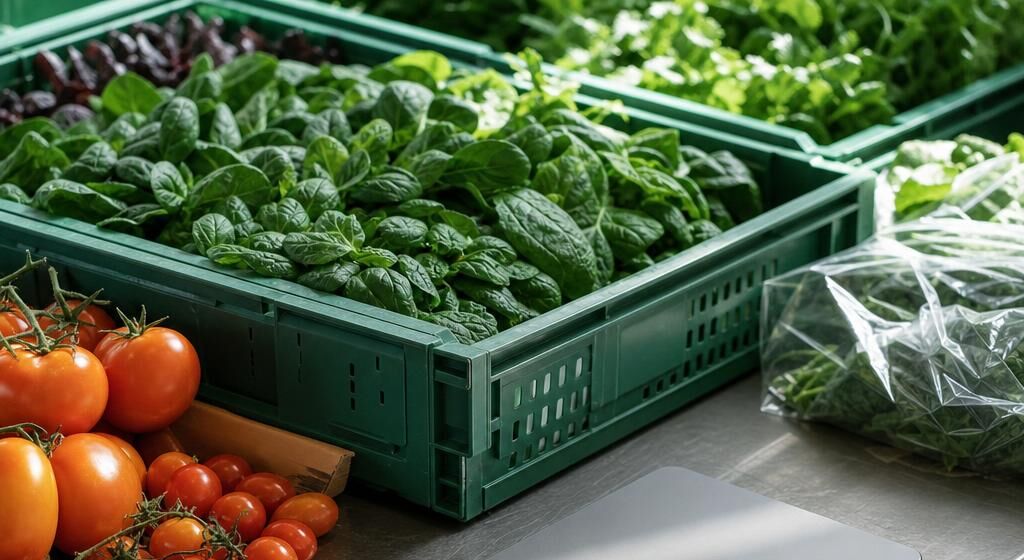
Green crates of salad leaves and herbs, a heap of ripe tomatoes and a tablet resting on a steel prep surface
Produce, crates and a shared screen: where most supply conversations really happen. Illustration, AI-generated.

FoodLocality builds software and web portals that help the people in a food-supply network talk to each other properly: growers and producers, wholesalers and hubs, kitchens, caterers and community food organisations. Availability lists, orders, substitutions, cut-off times, short deliveries and quality notes all travel through our tools in a form everyone can read, act on and trust.

We are a software company registered in Musselburgh, Midlothian. We do not move food, run a marketplace or take a cut of anyone’s trade. We build the communication layer that the people who do those things need, and then we hand it to them.

Why supply conversations break

Food moves fast and changes constantly. A grower’s availability shifts with the weather. A kitchen’s order shifts with bookings. A community pantry’s needs shift with whoever walks through the door. And most of that information still travels by phone call, text message, emailed spreadsheet and handwritten note on a delivery docket.

None of those channels is wrong on its own. The trouble is that they do not join up. The person who took the call is not the person who packs the order. The updated price list sits in one inbox while last week’s is used to invoice. A substitution is agreed verbally and nobody tells the chef. The result is waste, short deliveries, awkward conversations and a lot of time spent checking what was actually agreed.

Software will not fix weather or demand. What it can do is make sure that once something is known, it is written down once, in one place, and shown to everyone who needs it, in a form they can use on a phone in a cold store or a busy kitchen. That is the whole of our job.
What we build

Portals

Supplier and buyer portals

Secure web portals where suppliers publish availability and prices, and buyers place, amend and confirm orders before cut-off. Each participant sees only what applies to them. Changes are logged, acknowledged and visible.

Read the portals section

Messaging

Structured supply messages

Order confirmations, substitution offers, short-delivery notices and quality issues as structured messages with clear states, instead of loose texts.

Supply messaging

Connections

Links to existing systems

Exports and integrations with the accounting, stock or ordering tools participants already use, so nothing is typed twice.

How we connect

Hubs

Tools for networks and hubs

Coordination views for food hubs, cooperatives and community food networks handling many small suppliers and recipients.

Map your network
Close crop of fresh salad leaves and herbs packed in green crates
Illustration, AI-generated.

Who it is for

Built for the people standing next to the crates

  • Growers and producers who want to publish what they have today without six phone calls.
  • Wholesalers and distributors who need orders in a consistent format before the cut-off.
  • Kitchens and caterers who want to know about substitutions before service, not during it.
  • Food hubs and community organisations coordinating many small participants with limited staff.

How a project runs

Walk the chain

We talk to participants at each step, look at real (anonymised) order sheets and messages, and map who tells whom what, when.

Write it down

A short specification: participants, messages, states, cut-offs, permissions and exclusions, with an estimate.

Build in seasons

Small releases tested by real participants on their own phones, run alongside the old way until trusted.

Hand over and support

Guides for each participant type, administrator training and weekday support under a written arrangement.

The full approach

The best supply software is the one a grower can use with wet hands and a chef can read in ten seconds.

The principle behind every screen we design

Checklist

Are you ready for a supplier portal?

Tick what is already true. The note underneath tells you where a project would start.

0 of 8

Deliverables

What lands on your desk

Communication map
Who sends what to whom, through which channel, and where it goes wrong.
Specification
Messages, states, cut-offs, permissions and exclusions, in plain English.
Working portal or tool
Mobile-friendly, accessible, deployed under your accounts.
Participant guides
One page per participant type, written for their day.
Source and handover
Code in your repository; credentials and hosting in your name.

Standards on every screen

Readable in a hurry. Large type, clear states, few taps. We test on phones in bright and cold environments, not just at a desk.

Accessible. Keyboard and screen-reader support, good contrast and plain labels, checked against WCAG 2.2 AA criteria.

Fair visibility. Commercial information such as prices and volumes is shown only to the participants who have agreed to see it.

Honest about connectivity. Where signal is poor, the tool says so clearly rather than pretending a message was sent.

Personal data kept small. Business contact details only, with retention agreed in advance.

All our standards

What we do not do

Our software supports the communication that sits around those activities. Responsibility for the food, its safety and the commercial relationships stays with the participants, where it belongs.

Support after launch

Supply networks change season by season: new suppliers join, cut-offs move, a buyer changes their ordering system. Our support arrangements cover that reality, Monday to Friday, 09:00–18:00 UK time, with acknowledgement within one working day and a clear difference between fixes and changes. We design every tool so that if something fails out of hours, participants can fall back to their old channel without losing what was already agreed.

Support desk

Letters page: your questions

Do our suppliers need to install an app?
No. We build web portals that work in a phone browser, so participants open a link and sign in. Installation is optional where it helps.
Can it work for a small network?
Yes. Some of the most useful tools are small: a weekly availability and order sheet for a dozen growers and five kitchens.
Will you hold our prices or customer lists?
Your data sits in hosting accounts you control. We access it only to build and support the system, under written terms.
Can it connect to our accounting software?
Often, through exports or published interfaces. We assess each system early and say plainly when a connection is not worth building.
Do you run the network for us?
No. We build and support the software. Running the network, its relationships and its food stays with you.

Tell us where the message goes missing.

Describe one conversation in your supply chain that goes wrong too often. We reply within two working days.

Write to the desk Try the conversation mapper